
A PIECE OF SAHARAN AFRICA LAUNCHED INTO THE ATLANTIC
Fuerteventura, known as the “Beach of the Canary Islands”, has been declared a Biosphere Reserve in its entirety by UNESCO. It stands out for its smooth reliefs and for being the oldest of the archipelago from a geological point of view.
With an average annual temperature of 21.1ºC and its subtropical climate, the island is simply perfect for your holidays. Winters are very pleasant and summers not hot at all, and its beaches are simply a spectacle. Located less than a hundred kilometres from the African coast, this island of unique desert landscape has as its identity more than 150 kilometres of white sand beaches and emerald waters. Its sea breeze, loaded with negative ions, makes one relax completely as soon as they step on Fuerteventura. You will think you are on another planet.
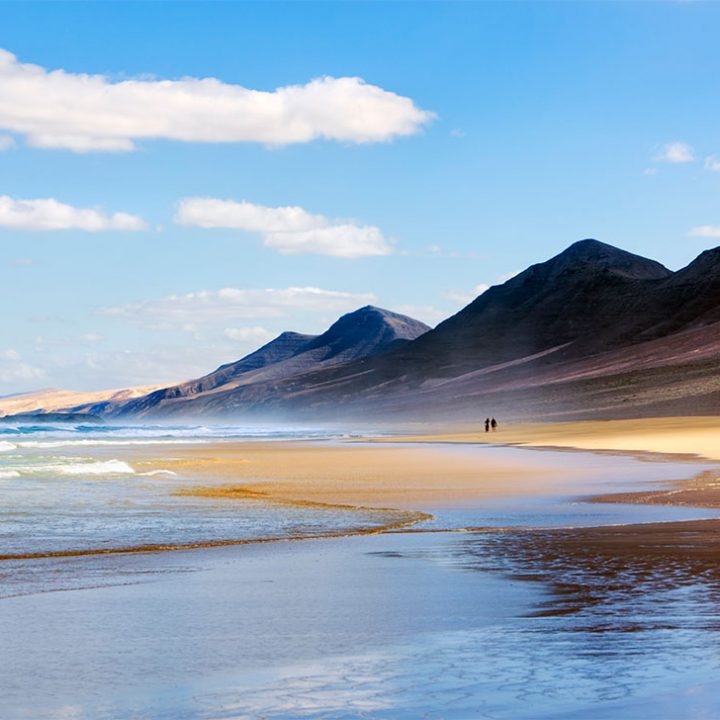
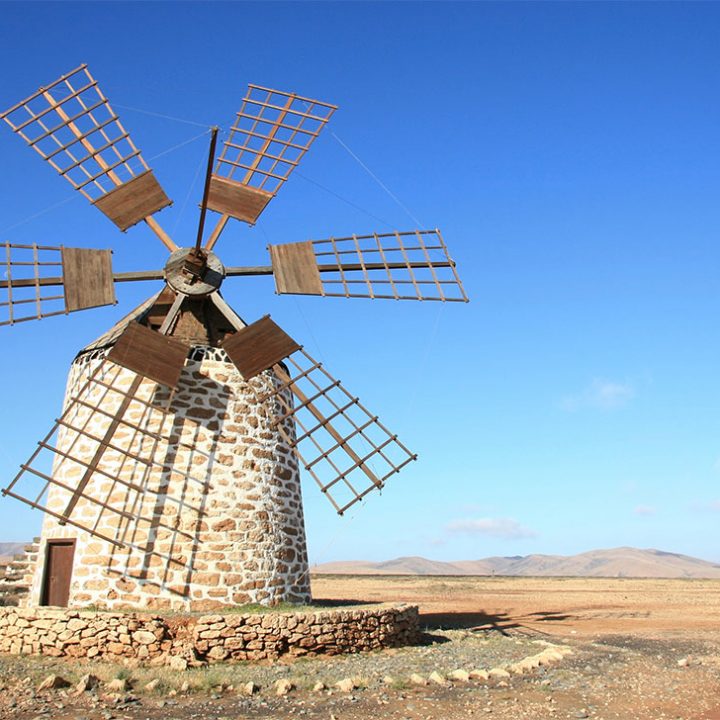
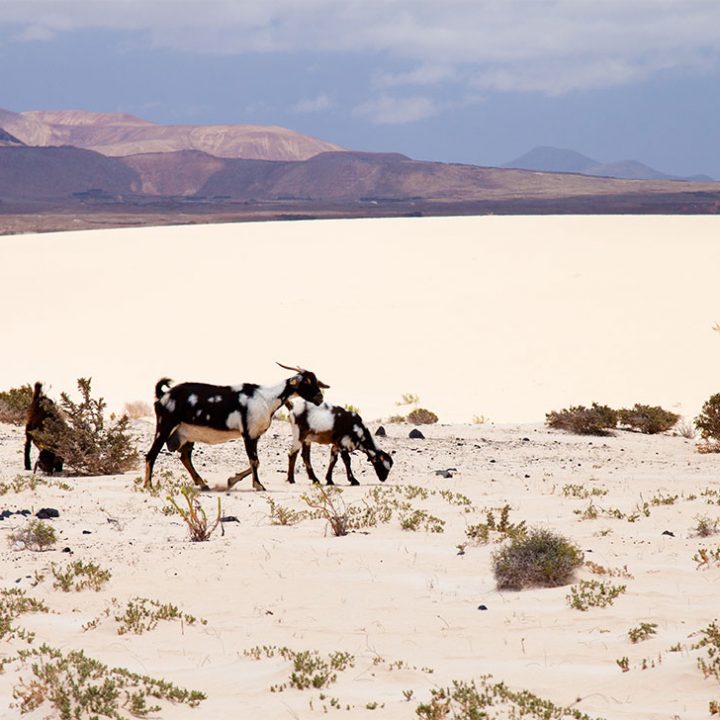
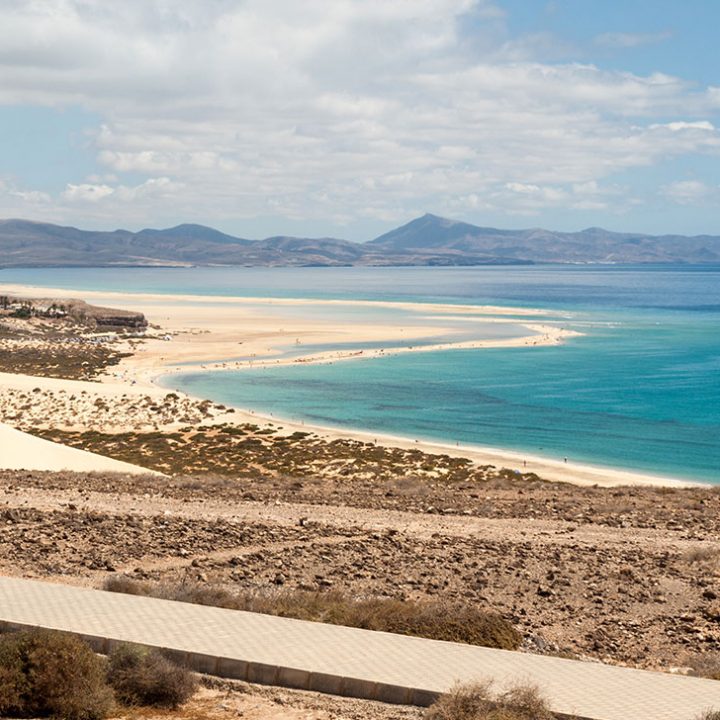
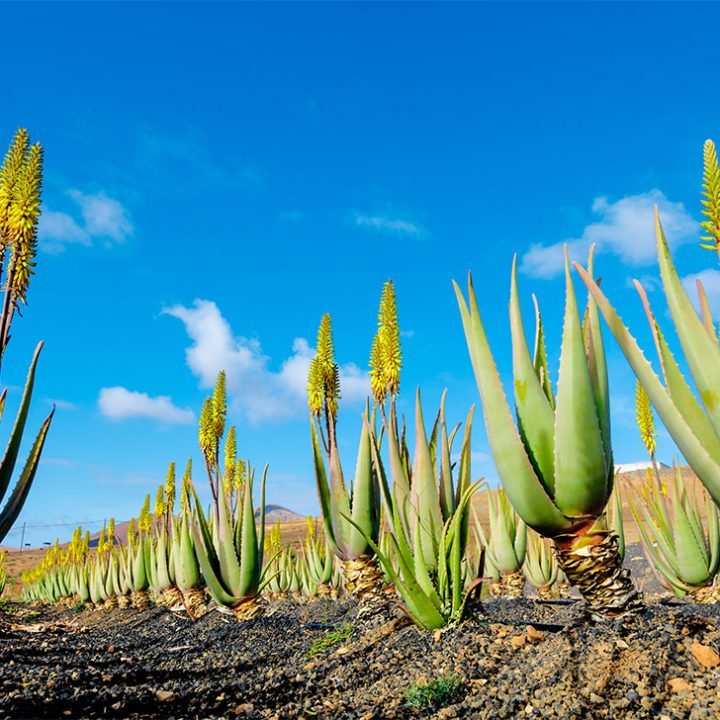
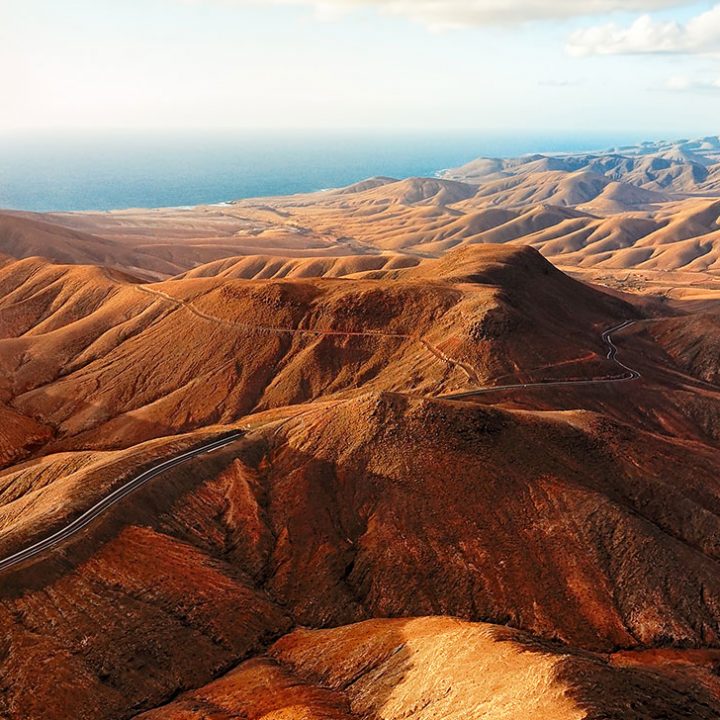
Declared a Biosphere Reserve in its entirety, Fuerteventura is the oldest island in the archipelago from a geological point of view.
MUCH MORE THAN SAND AND WATER
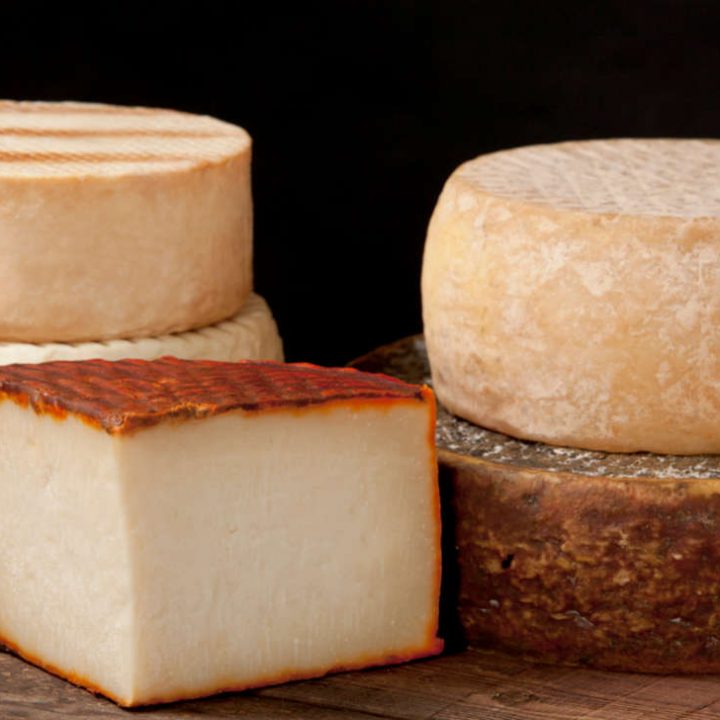
Fuerteventura is not just sand and sea. Fuerteventura is also gastronomy. Majorero cheese is the ambassador par excellence of the island’s gastronomy. Made from majorero goat’s milk, its Designation of Origin has been recognised since 1996.
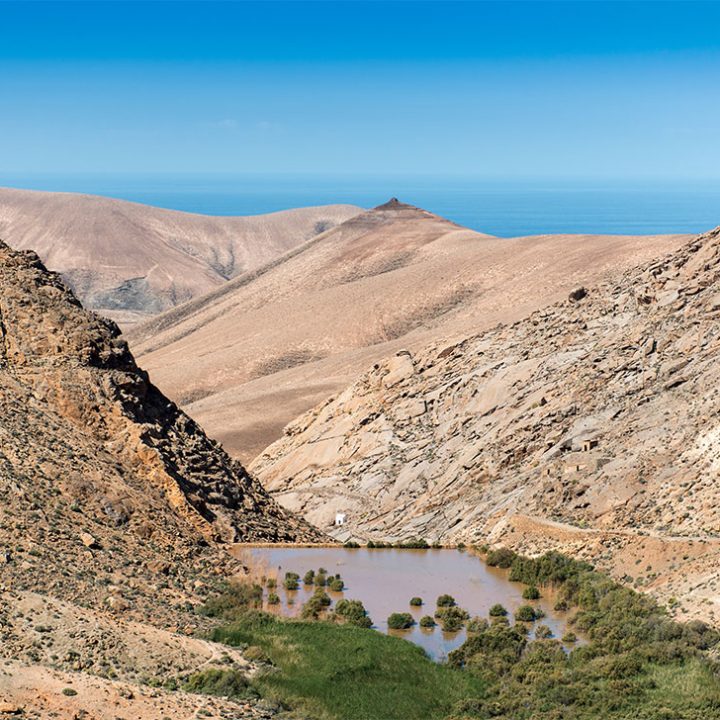
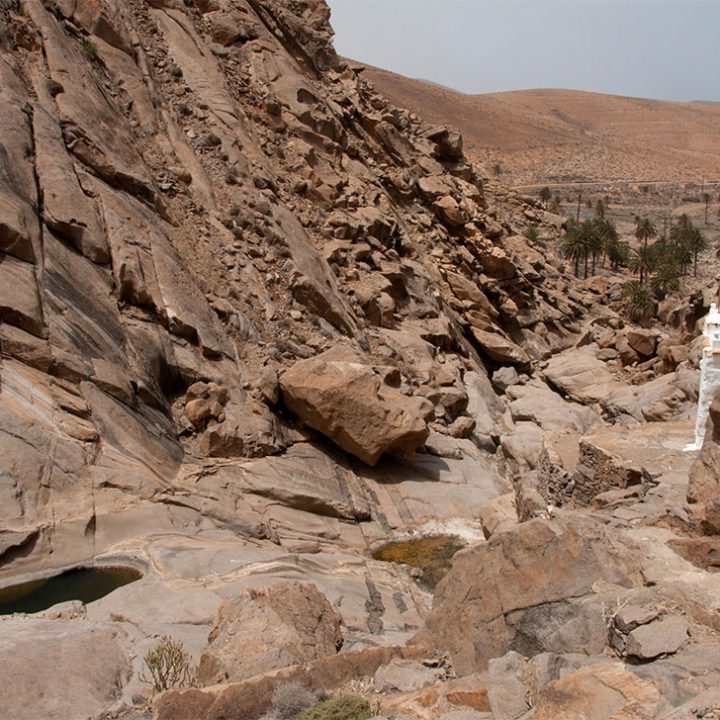
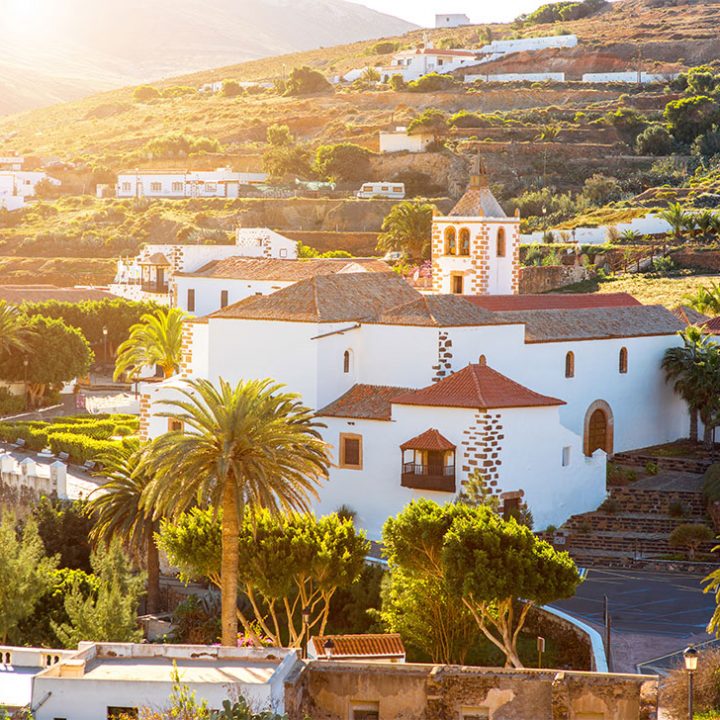
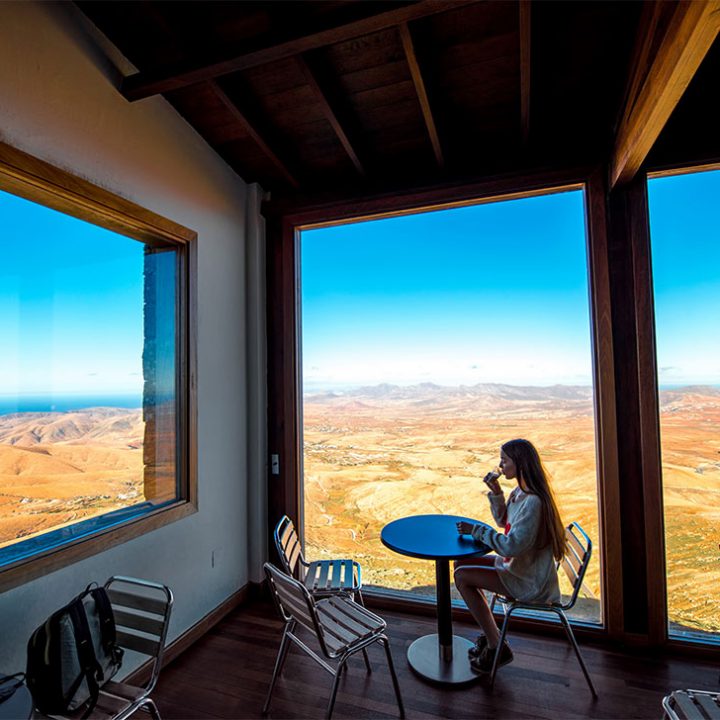
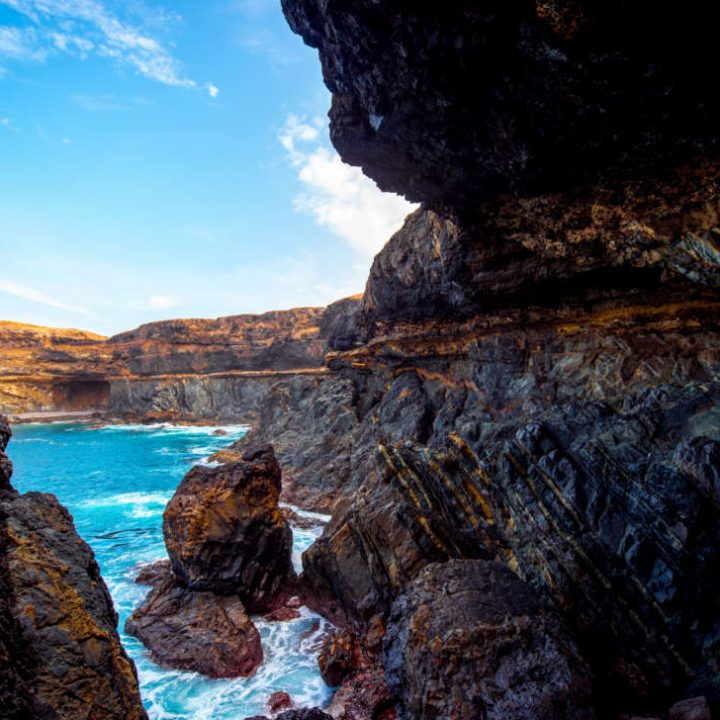
To the surprise of many, the island also called “beach island” hides in its interior a world that no one imagines could exist in this apparently flat landscape. Fishing villages like El Jablito or El Cotillo, or the town of Betancuria (former capital of the island), will delight all those who want to know the island in depth and discover picturesque corners. Precisely in the natural area of Betancuria you will find the Peñitas ravine, one of the most interesting places on the island. The ravine is part of one of the most beautiful trails in Fuerteventura, crossing the towns of Vega de Río Palmas and Buen Paso, and ending in the spectacular Ajuy with its famous caves, where pirates and corsairs traded. In addition to having an unusual landscape, the Peñitas ravine carries in its lap a dam and thin palm trees that create this green refuge in the middle of the desert. And in this same ravine stands the beautiful hermitage of the Virgen de la Peña, patron saint of Fuerteventura, which gives the place its name. Without a doubt, this path has become a place of worship for hikers and climbers. The syenite rock formations, the result of basaltic magma, look like islets embedded in the middle of the land, creating the perfect setting for bouldering.
WIND AND SUN FOR SPORTS ENTHUSIASTS
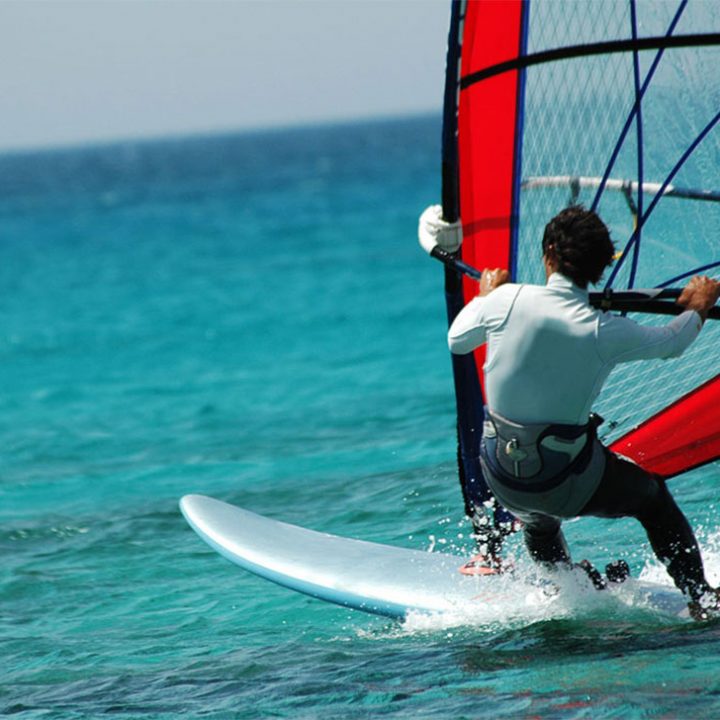
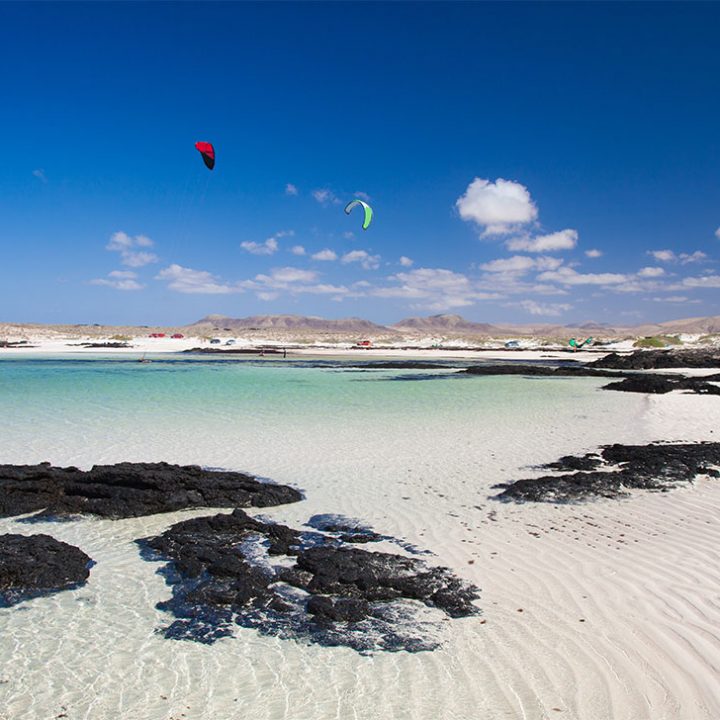
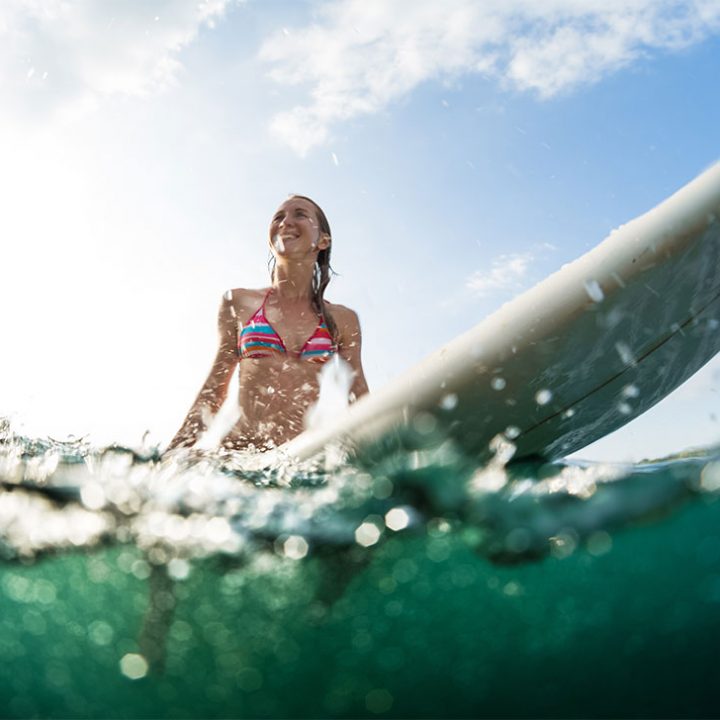
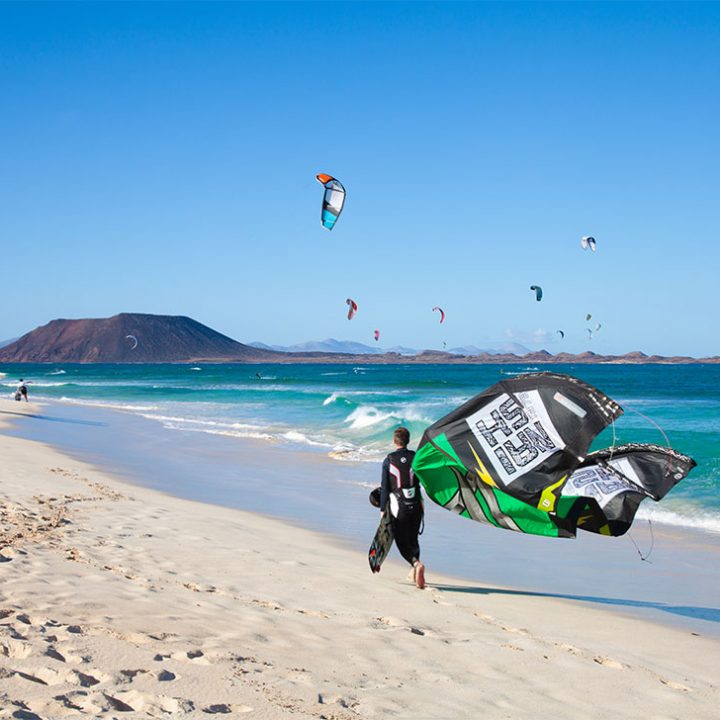
It’s a good time to take your board and glide through the waters of Fuerteventura. Long sunny days, intense winds and waves of up to two meters make the island world-renowned for surfing, windsurfing and kitesurfing. Corralejo, Majanicho, Sotavento or El Cotillo are just some examples of spots you should visit if you love any of these sports. It’s no wonder that Fuerteventura repeatedly hosts the Windsurfing and Kitesurfing World Championship.
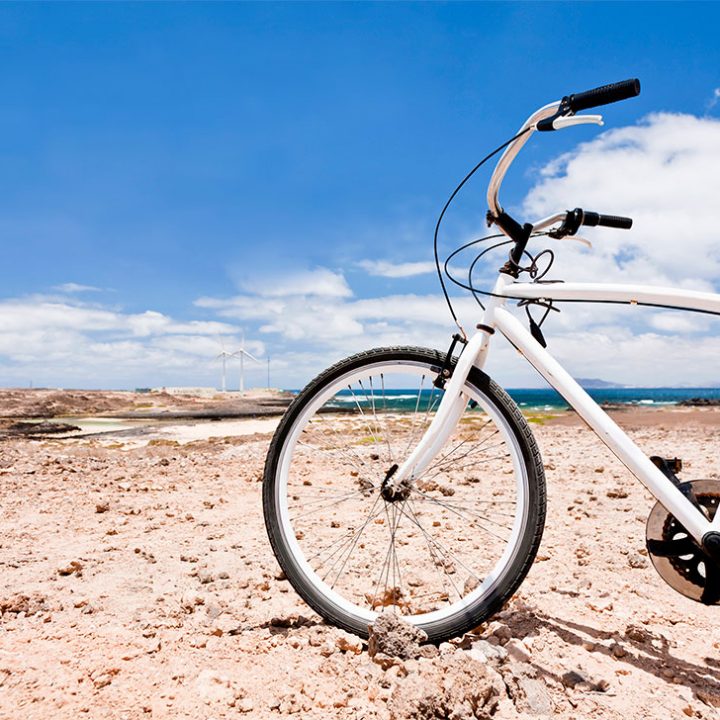
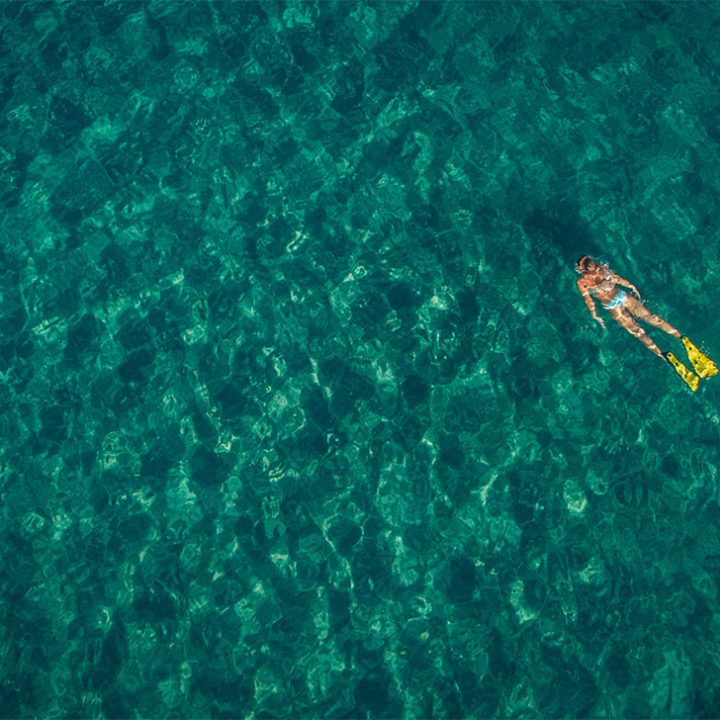
Naturally, the island invites you to practice other types of activities, such as exploring it by bicycle or off-road vehicle, or discovering its spectacular seabed by diving or snorkeling.
BLUE FLAG DESTINATION
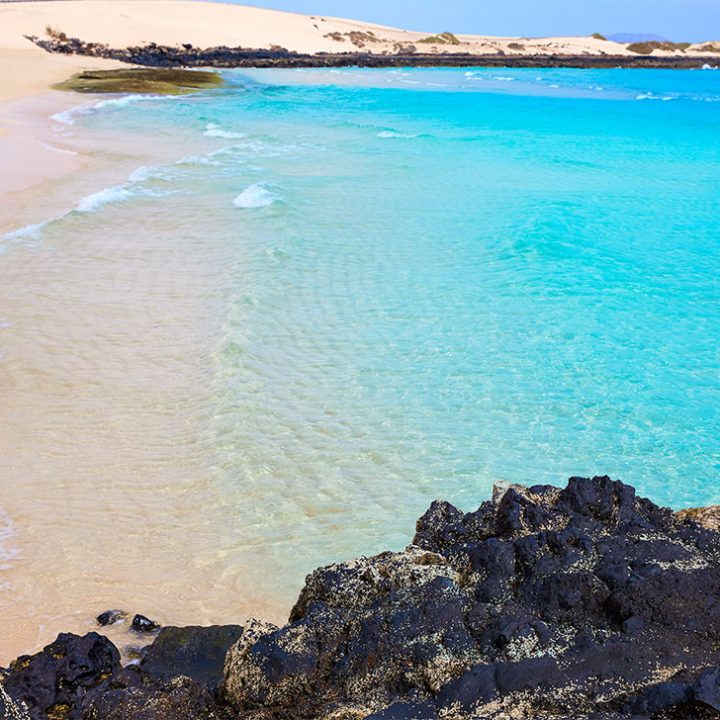
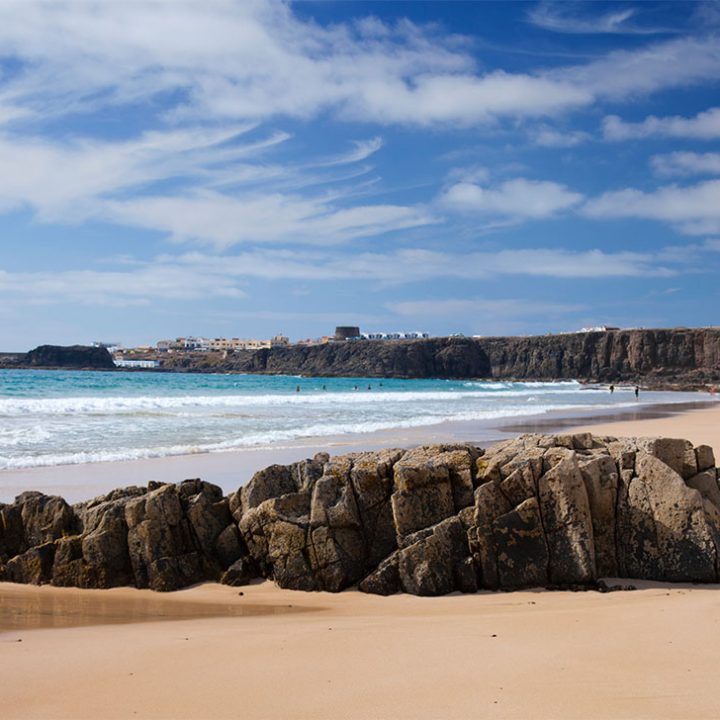
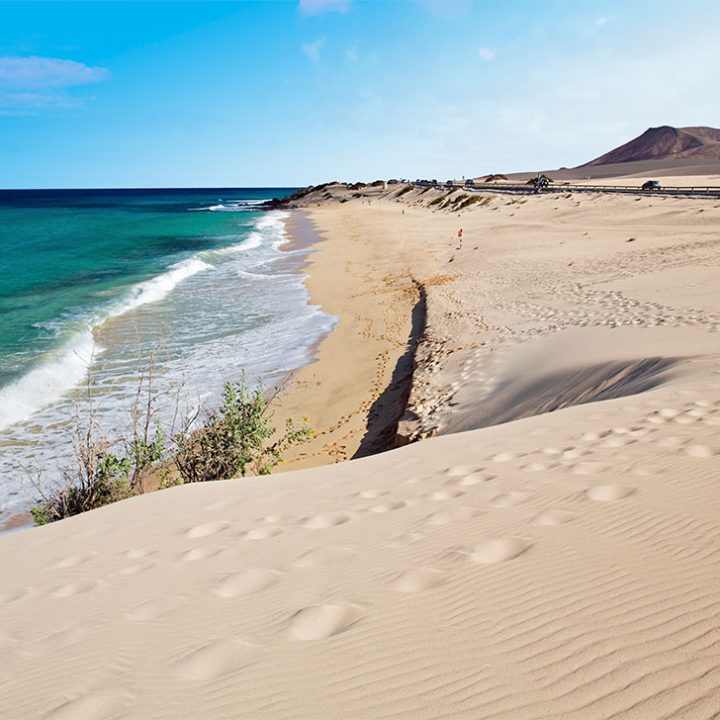
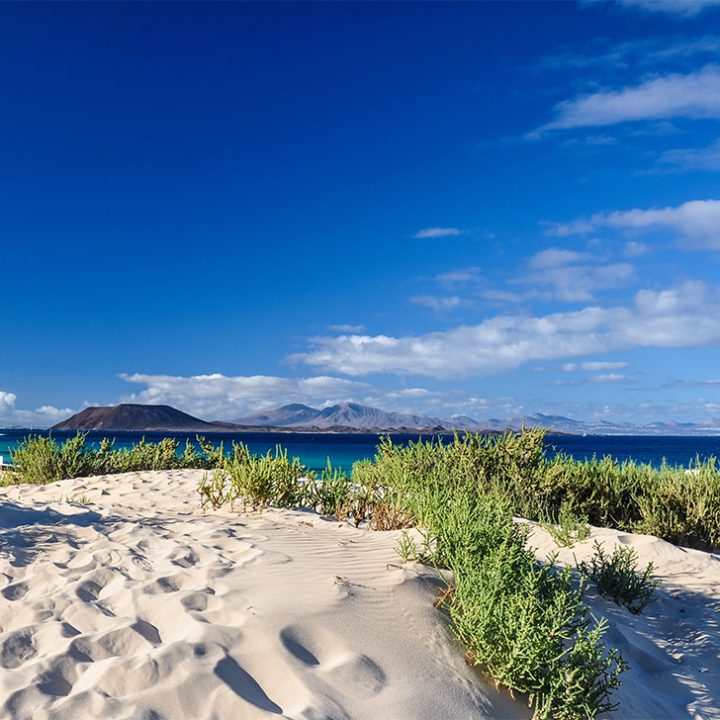
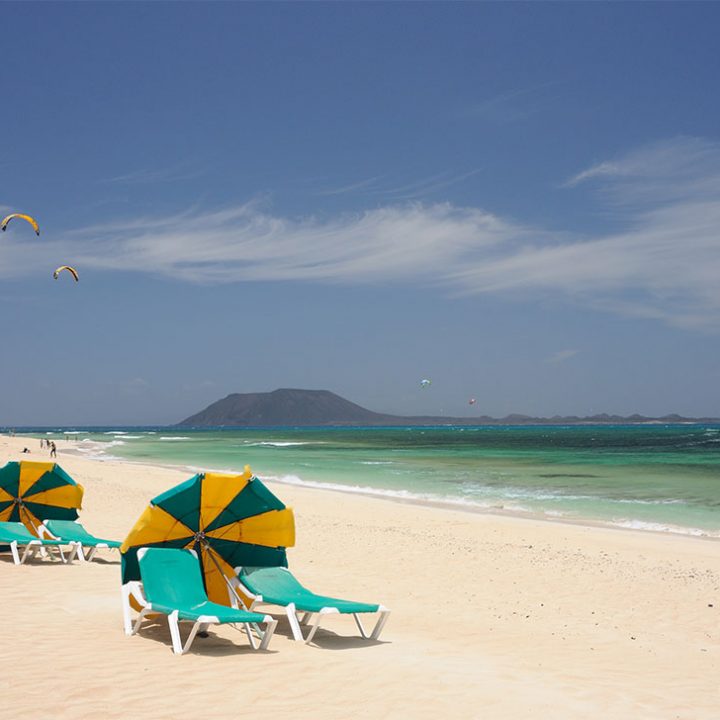
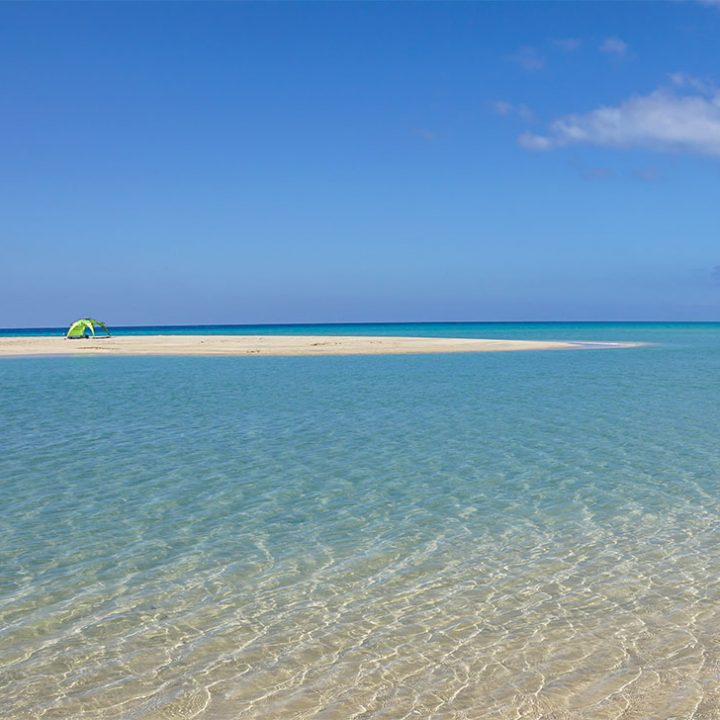
Definitely, it is a privilege to be able to enjoy during your stay beaches and ports that not only possess the innate Canarian beauty, but also stand out for their quality. Fuerteventura’s coastline, with 340 kilometres of coast, gives us virgin and remote beaches, beaches with rough waters and large waves, calm sea beaches and sand lakes, and beaches in charming fishing villages. In Playa Blanca, Los Pozos, Butihondo or Morrojable, the prestigious Blue Flag waves proudly. In the municipality of La Oliva, where our Bristol Sunset Beach is located, Grandes Playas, La Concha (Chica), Charco de las Agujas and Corralejo Viejo (La Goleta) have been awarded. Quite a luxury, don’t you think?
HOW TO GET TO BRISTOL SUNSET BEACH
Fuerteventura is a natural, volcanic, and open island. Its environment and climate have their own characteristics that are part of the experience of traveling to the island.
By car: The journey from the airport takes approximately 35 minutes. You can arrive by rental car or your own vehicle. There is free parking in front of the complex.
By private transfer or shuttle: there are private transfer and shared shuttle services that connect the airport with Corralejo, such as Canary Shuttle.
By bus: from the airport it is possible to reach Corralejo by combining 2 bus lines. The stop is located 2 minutes' walk from the complex.
THE REAL ISLAND: WHAT YOU SHOULD KNOW
Wind: As it is an island, wind is present much of the year, especially in the north. It is an essential part of Fuerteventura's climate and one of the reasons why the island is a reference for water sports.
Calima: Calima is an occasional natural phenomenon that occurs when suspended dust from the Sahara reaches the islands. It can last for a few days and cause lower visibility or the presence of dust in the environment.
Water: In Fuerteventura, all water is obtained through desalination processes, as the island does not have natural sources of fresh water. For this reason, tap water is not suitable for drinking and is a resource that must be used responsibly.
Natural environment: Fuerteventura is a sparsely urbanised island and very much connected with nature. Although preventive fumigation treatments are carried out, the occasional presence of insects is part of the natural environment of the island. Knowing these characteristics helps to enjoy Fuerteventura with realistic expectations and a more conscious experience.
Any questions or requests?
We will be happy to help you